Are Hamsters Happy in a Cage? How to Help Them Thrive
Are hamsters happy living in a cage?
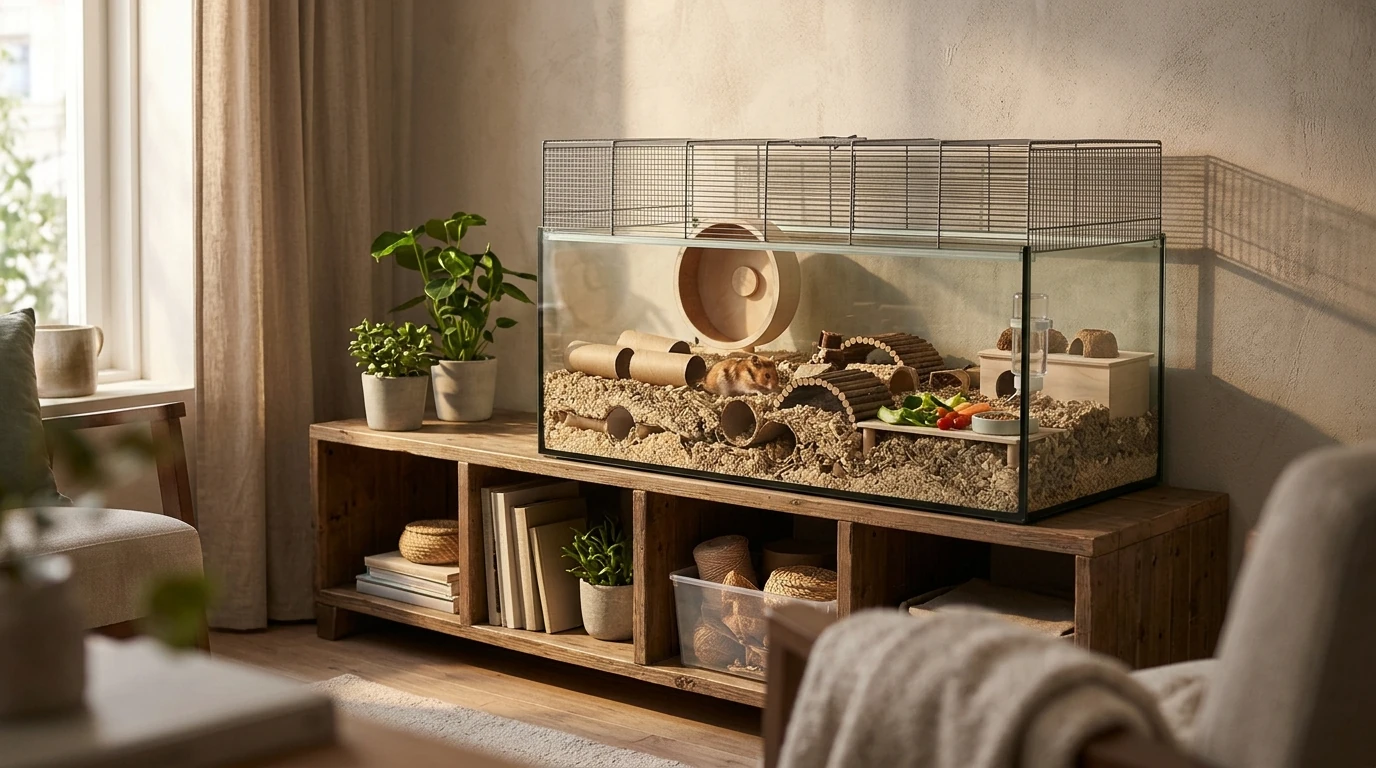
Hamsters can live contentedly in a cage when it gives them enough room to explore, burrow, exercise, and retreat. A cage is simply the enclosure; what matters is whether the space inside supports the behaviors a hamster naturally needs. A cramped, bare cage can lead to boredom and stress, while a roomy, enriched home gives your hamster more opportunities to stay active and feel secure.
We recommend thinking beyond the cage’s appearance. An enclosure should have a large, continuous floor area, secure ventilation, and enough depth for a substantial layer of bedding. Hamsters spend much of their active time digging and traveling, so floor space and bedding depth are more useful than a collection of small tubes or stacked levels.
What makes a hamster cage a good home?
Start with a secure enclosure that provides plenty of uninterrupted floor space. Add deep, unscented paper bedding that holds tunnels, along with a hideout where your hamster can retreat. A solid-surface exercise wheel should be large enough for your hamster to run without bending its back. Avoid wire or mesh wheels, which can catch feet.
Scatter some food through the bedding to encourage foraging, and offer safe chew items to help your hamster wear down its continuously growing teeth. Tunnels, cork pieces, and a sand bath can add variety. Use hamster-safe sand rather than fine dust, which can irritate the respiratory system.
Keep food and fresh water accessible, and remove soiled bedding regularly. When cleaning, preserve some clean, familiar bedding so the enclosure does not lose every familiar scent at once. Place the cage away from direct sunlight, drafts, loud noise, and other pets that may disturb your hamster.
How can you tell if your hamster needs a change?
Look for opportunities to improve the setup if your hamster repeatedly bites the bars, paces, or tries persistently to escape. These behaviors can have several causes, but more usable space, deeper bedding, and varied enrichment are practical places to start. Hamsters are generally active in the evening and at night, so give yours quiet time during the day.
Our team recommends building the habitat around your hamster’s daily activities rather than filling it with accessories. For more setup ideas, visit our hamster cage setup guide.
FAQ
Can two hamsters share a cage?
Many hamsters, especially Syrian hamsters, should live alone because they can fight and seriously injure each other. Housing hamsters separately is the safest choice unless you have species-specific guidance from an experienced veterinarian.






Leave a comment