Chandelier Sizing Guide: Height, Scale and Clearance
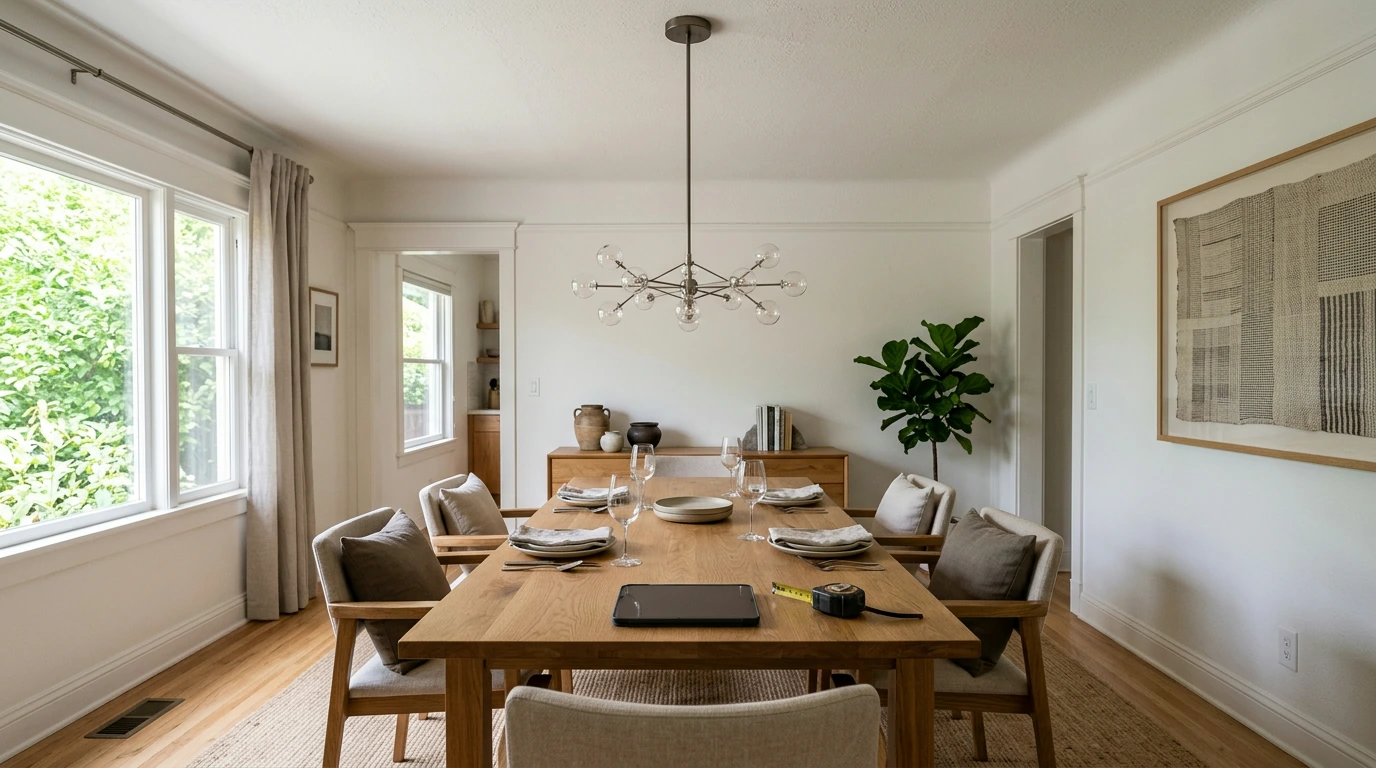
A well-proportioned chandelier can bring a room together without overwhelming it. Start with a few measurements, then consider how you use the space and what you want the light to do. Our digital checklist can help you keep those details together as you compare fixtures. For more guidance, see Chandeliers for High Ceilings – The Ultimate Guide to Choosing the ….
Start With the Room and Its Purpose
Measure the room’s length, width, and ceiling height, and write the dimensions down before you shop. Next, identify where the chandelier will hang. A fixture centered over a dining table has different clearance needs from one suspended over an open walkway. For further reading, see How to Pick the Right Chandelier Size for Your Room.
Look at the furniture and sightlines, too. A chandelier can help define a dining area within an open-plan room, but it should not obstruct conversation or compete with a prominent view. Note your existing lamps, ceiling lights, and windows so you can judge whether the chandelier needs to provide general illumination or primarily add atmosphere.
If your table is off-center in the room, decide whether centering the fixture over the table makes more sense than centering it on the ceiling. Our team recommends considering the furniture arrangement you actually use, rather than choosing a position based on the room’s shape alone.
Estimate the Right Chandelier Width
For a general starting point, add the room’s length and width in feet, then use that sum as the approximate chandelier diameter in inches. For example, a 12-by-14-foot room gives you a starting diameter of about 26 inches.
Over a dining table, compare the fixture with the table itself. Choose a chandelier narrower than the tabletop so it feels balanced and leaves space around the edges. Consider the table at its usual size; if you regularly use an extension leaf, account for that arrangement as well.
Starting Points for Chandelier Size and Placement
| Placement | Measurement | Starting point |
|---|---|---|
| Room | Length plus width in feet | Use the sum as an approximate diameter in inches |
| Dining table | Table width | Choose a fixture narrower than the table |
| Above a dining table | Tabletop to fixture bottom | Allow approximately 30–36 inches; adjust for ceiling height and sightlines |
| Open walkway | Floor to fixture bottom | Allow at least 7 feet of clearance where practical |
These numbers are guides, not rigid rules. An open frame may feel lighter than a solid shade of the same diameter, while a broad fixture can feel more prominent in a small, furnished room. Use the measurements to narrow your choices, then assess the shape and visual weight.
Check Hanging Height and Clearance
Measure from the surface below the chandelier to the bottom of the fixture. Above a dining table, 30–36 inches is a common starting range. Adjust within or beyond that range as needed for ceiling height, the fixture’s proportions, and a clear view across the table.
In an open walkway, aim for at least 7 feet between the floor and the fixture bottom where practical. Check door swings and walking routes, and pay particular attention to areas where someone might pass beneath the chandelier after furniture is moved.
Include both the fixture body and its suspension in your calculations. A tall chandelier may need more vertical space than its width suggests, and a chain, rod, or cord must be suitable for the intended hanging height. Confirm local requirements and consult a qualified electrician when needed, especially if the fixture location or electrical box needs to change.
Balance Style and Light
Two chandeliers with the same diameter can have very different effects. An airy design with slender arms may blend into a room, while a dense cluster or opaque shade can become a stronger focal point. Compare each option with the scale of your table, chairs, and other furnishings.
Think about the light you need for dining, conversation, and everyday tasks. Existing lamps and ceiling lights may supply general illumination, leaving the chandelier to provide a softer layer. Before purchasing, check the fixture’s bulb requirements and dimmer compatibility. The U.S. Department of Energy’s guide to lighting choices explains how to compare options for efficient lighting.
For a cohesive dining area, consider how the fixture works with the pieces you use every day. Our Sleek Japanese-Style Ceramic Coffee Mug, for example, can be part of a simple table setting that lets a distinctive chandelier remain the focal point.
Keep Your Measurements Together
Before making a final choice, record the room dimensions, intended placement, table width if applicable, and available clearance. Add each fixture’s width, body height, and suspension length so you can compare options against the same plan.
Our chandelier height and scale checklist is an in-stock digital planning aid priced at $4.99 USD. Use it to keep your measurements and placement considerations organized while you shop.
FAQ
How do I choose a chandelier for my home?
Start with the room dimensions and intended placement, then estimate the fixture width and check the hanging clearance. Choose a style and light output that suit the room and its existing lighting.
How high should a chandelier hang above a dining table?
A common starting point is 30–36 inches between the tabletop and the bottom of the fixture. Adjust for sightlines, ceiling height, and the chandelier’s proportions.






Leave a comment