
Pet Travel Tips: Prepare, Pack, and Journey Safely
What are some tips for traveling with a pet?
Start with your pet’s needs, then plan the route around them. A little preparation can make a car ride or flight easier for both of you. We recommend confirming transportation and lodging rules early, packing familiar essentials, and giving your pet time to adjust to travel gear before departure.
How should you prepare your pet for a trip?
Schedule a veterinary visit, especially before a long journey or international trip. Ask whether your pet is healthy enough to travel and whether vaccinations, medications, or a health certificate are needed. Keep identification tags current and make sure the contact information associated with your pet’s microchip is up to date.
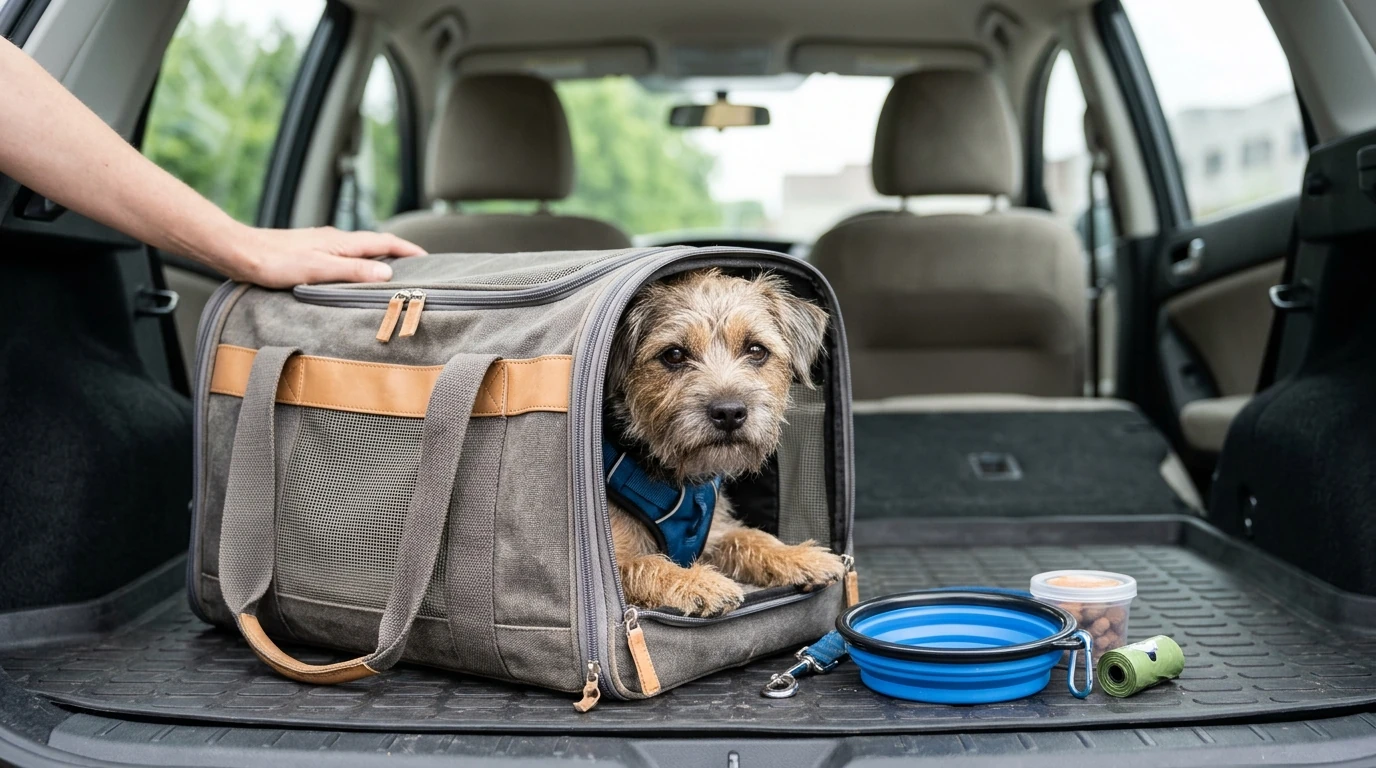
Introduce the carrier gradually at home, using treats and short practice sessions to build a positive association. Choose a secure, well-ventilated carrier that lets your pet stand, turn around, and lie down naturally. For flights, confirm the airline’s carrier dimensions and pet policies before booking.
What should you pack?
Bring enough familiar food and medication for the trip, plus a little extra in case of delays. Our team suggests keeping these essentials within easy reach:
- Water and a portable bowl
- A leash, collar, and identification tags
- Waste bags and cleaning supplies
- Copies of vaccination records and required travel documents
- A favorite toy and treats
- A recent photo of your pet
How can you make the journey safer?
On road trips, secure your pet in a crash-tested travel restraint or an appropriately secured carrier rather than letting them roam the vehicle. Plan regular stops for water, exercise, and bathroom breaks. Never leave your pet alone in a parked car, where temperatures can become dangerous quickly.
For air travel, reserve your pet’s space as early as possible and review the airline’s rules for cabin and cargo travel. Avoid giving sedatives unless your veterinarian specifically recommends them. At your destination, check the room for hazards and keep your pet supervised while they explore unfamiliar surroundings.
For more planning details, see our guide to pet travel, flights, airline rules, and checklists.
FAQ
How do people travel internationally with pets?
People typically arrange travel well in advance, meet the destination’s vaccination, microchip, and documentation requirements, and follow their airline’s pet policies. Check both destination and return-entry rules with the relevant government authorities and your veterinarian, since some processes take months.
















Leave a comment