
Flying With Pets: A Practical Travel Checklist
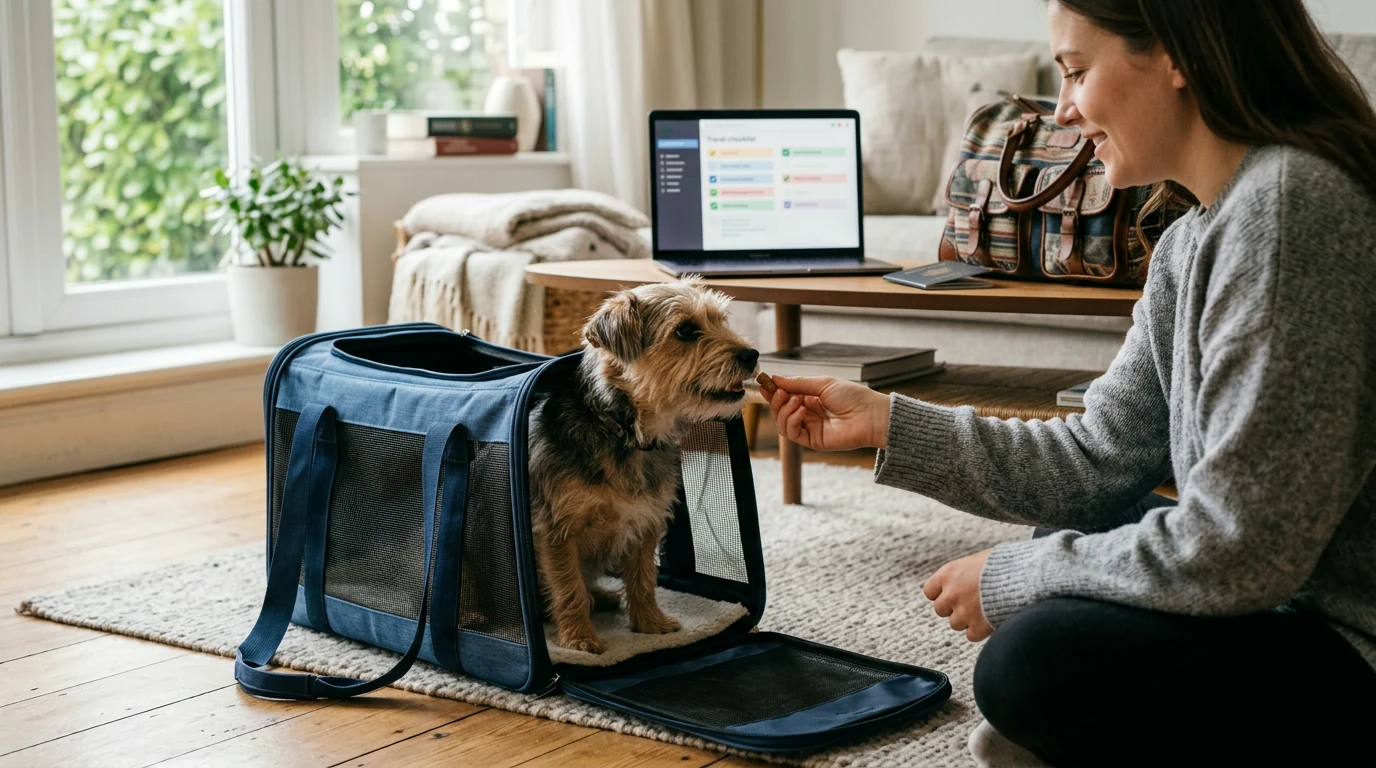
Flying with a pet starts long before you arrive at the airport. The right plan depends on your pet’s health, your route, the airline’s rules, and the requirements at every stop. Giving yourself time to sort out those details can make travel day easier for both of you.
Our Pet Travel 101 digital guide and checklist offers a practical place to organize your preparations. Pair it with current instructions from your airline, veterinarian, and destination authorities; requirements can change and may differ by route.
Start With Your Pet and Your Route
Before you book, consider whether flying is appropriate for your pet. Talk with your veterinarian about the journey, particularly if your pet has a health condition, is a short-nosed breed, or has had trouble with travel. Your veterinarian can help you weigh the trip’s demands and discuss ways to support your pet.
Next, look at the whole route rather than just the departure and arrival cities. Ask the airline whether it accepts your type of pet on each flight and whether your pet can travel in the cabin or requires another arrangement. Availability may be limited, and a connecting flight can introduce different rules or handling procedures.
Confirm the requirements for your destination, any transit points, and your return home before paying for flights. The USDA APHIS pet travel resource is a useful starting point for international travel requirements, but you should also confirm details with the relevant authorities.
Check the Rules Before You Book
Contact the airline directly to ask about pet space on your preferred flights, fees, carrier dimensions, and the steps for making a pet reservation. If more than one airline operates your itinerary, confirm the rules with each one. Don’t assume that a ticket for you automatically reserves a place for your pet.
Ask your veterinarian and the appropriate authorities which vaccinations, identification, health certificates, and other documents apply. Some paperwork must be completed within a particular window, so map out the timing early. The CDC’s guidance on traveling with pets also offers a helpful overview of health and planning considerations.
Pet Flight Planning Checklist
| Check | Who to confirm with | When |
|---|---|---|
| Pet acceptance, fees, and carrier rules | Airline | Before booking |
| Health and travel documents | Veterinarian and destination authorities | Well before departure |
| Pet reservation and flight details | Airline | After booking and again before travel |
| Food, water, medication, and carrier comfort | Veterinarian and airline | Before packing |
Use this table as a prompt for your own plan, not as a substitute for current airline or government instructions. Keep a record of confirmation numbers and any deadlines alongside your itinerary.
Help Your Pet Get Comfortable
A carrier is less unfamiliar when your pet has had time to explore it at home. Place it in a familiar area, leave the door open, and reward calm interest. Gradually practice short periods inside, building up only as your pet remains comfortable. If appropriate, add brief trips so movement and new surroundings are not completely new on flight day.
Choose a carrier that meets the airline’s current requirements and gives your pet the space required by its rules. Ask your veterinarian about feeding and hydration around the flight, as well as how to manage any regular medication. Do not sedate your pet without veterinary guidance.
Practice can also reveal practical issues: whether you can secure the carrier confidently, how you’ll carry it with your other belongings, and what your pet needs to settle after a short outing. Adjust your routine well before departure rather than trying everything for the first time at the airport.
Make Departure Day Easier
Keep your pet’s required documents, reservation details, medication, and essential supplies where you can reach them. Label the carrier with your contact information, and bring appropriate cleanup supplies. Follow the airline’s instructions for what can be placed in or attached to the carrier.
Allow extra time for check-in and ask the airline how security screening works when you’re traveling with a pet. Knowing whether you’ll need to remove your pet from the carrier can help you prepare a secure way to handle that step.
At your destination, plan a calm transition. Offer water and arrange a safe, quiet place for your pet to settle. If your journey includes a return flight, keep your paperwork and confirmation details accessible for that leg too.
Keep Your Plans Together With Pet Travel 101
Our Pet Travel 101 digital guide and checklist is designed for pet owners preparing for flights. At $8.99, it gives you a practical companion for keeping travel tasks in one place as you work through your route and your pet’s needs.
Our team recommends using the checklist alongside the latest directions from your airline, veterinarian, and destination authorities. If you’re also preparing to travel with a young child, our Smart Baby Gear on a Budget digital guide may help you consider baby essentials separately from your pet’s travel plan.
FAQ
What is the 3-3-3 rule for pets?
The 3-3-3 rule is a general guideline for a newly adopted pet’s adjustment over roughly three days, three weeks, and three months. It is not an airline rule or a guaranteed timeline.
What are some tips for traveling with a pet?
Check airline and destination requirements, consult your veterinarian, and help your pet practice spending time in its carrier. Keep required documents and essential supplies accessible throughout the journey.
















Leave a comment