Best Type of Home for a Hamster: Enclosure Guide
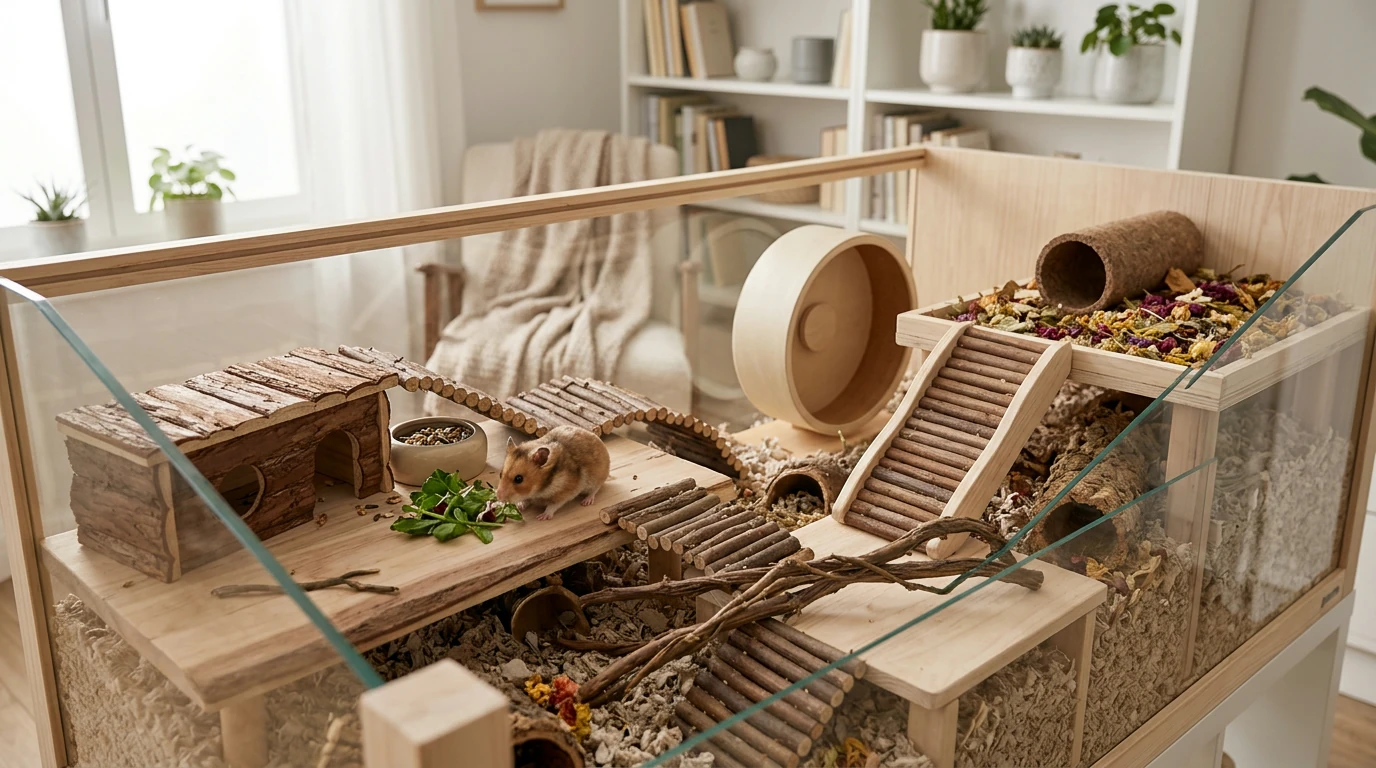
What is the best type of home for a hamster?
The best home for a hamster is a spacious, secure enclosure with a solid floor, good ventilation, and enough depth for burrowing. A large glass tank with a secure mesh lid or a purpose-built enclosure with a deep base can work well. What matters most is the usable floor space and the ability to create a safe, enriching habitat.
We recommend choosing an enclosure with at least 100 by 50 centimeters of continuous floor space, or approximately 40 by 20 inches. Bigger is better: extra room lets you add bedding, a wheel, hiding places, and foraging areas without crowding your hamster.
Which enclosure features matter most?
A deep, solid base
Hamsters naturally dig tunnels, so look for a home that holds at least 10 inches of suitable bedding across a substantial area. Unscented paper bedding is a good option. Avoid scented bedding, cedar, and pine shavings, which can irritate your hamster’s respiratory system.
Secure ventilation
A mesh lid or well-ventilated enclosure helps keep air moving while preventing escapes. Make sure the lid closes securely and that any gaps are too small for your hamster to squeeze through. If you choose a wire enclosure, look for a deep base and narrow bar spacing; wire floors can injure small feet.
Room for essentials
Choose a solid running wheel large enough for your hamster to run without arching its back. Many dwarf hamsters need a wheel of at least 8 inches in diameter, while Syrian hamsters often need 11 to 12 inches or more. Add a stable hideout, a sand bath with hamster-safe sand, a water source, and space to scatter food for foraging.
What should you avoid?
Skip small cages with attached plastic tubes as the main living space. They can be difficult to ventilate and clean, and they rarely provide enough uninterrupted floor space or bedding depth. Avoid exercise balls, too; a secure playpen is a better option for supervised exploration outside the enclosure.
Our team recommends housing hamsters individually. Even hamsters that appear friendly can fight and cause serious injuries. For more setup ideas, explore our hamster home setup guide.
FAQ
Where should you put a hamster enclosure?
Place it in a quiet indoor area away from direct sunlight, drafts, radiators, and other pets. Keep the room at a comfortable, stable temperature and avoid sudden temperature changes.







Leave a comment